

具体描述
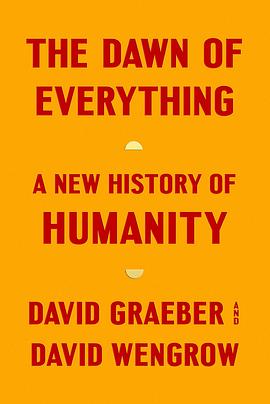
A trailblazing account of human history, challenging our most fundamental assumptions about social evolution--from the development of agriculture and cities to the emergence of the state, political violence, and social inequality--and revealing new possibilities for human emancipation.
For generations, our remote ancestors have been cast as primitive and childlike--either free and equal innocents, or thuggish and warlike. Civilization, we are told, could be achieved only by sacrificing those original freedoms or, alternatively, by taming our baser instincts. David Graeber and David Wengrow show how such theories first emerged in the eighteenth century as a conservative reaction to powerful critiques of European society posed by Indigenous observers and intellectuals. Revisiting this encounter has startling implications for how we make sense of human history today, including the origins of farming, property, cities, democracy, slavery, and civilization itself.
Drawing on pathbreaking research in archaeology and anthropology, the authors show how history becomes a far more interesting place once we learn to throw off our conceptual shackles and perceive what's really there. If humans did not spend 95 percent of their evolutionary past in tiny bands of hunter-gatherers, what were they doing all that time? If agriculture, and cities, did not mean a plunge into hierarchy and domination, then what kinds of social and economic organization did they lead to? What was really happening during the periods that we usually describe as the emergence of the state? The answers are often unexpected, and suggest that the course of human history may be less set in stone, and more full of playful, hopeful possibilities, than we tend to assume.
The Dawn of Everything fundamentally transforms our understanding of the human past and offers a path toward imagining new forms of freedom, new ways of organizing society. This is a monumental book of formidable intellectual range, animated by curiosity, moral vision, and a faith in the power of direct action.
Includes Black-and-White Illustrations
用户评价
##很好看,我还把句式用在了雅思作文上面
评分##这本书的中心思想其实很简单,而且反复阐述强调,生怕你错过了:人类的社会并不是以前所以为的从原始而平等的小型部落线性发展成大型而充满不平等的"高等文明"。相反,作者认为在发展过程中,很多文明都有反复、波动,曾经有意识地去尝试各种不同的社会组织方式,有时候会刻意选择从高度分层的社会变成相对平等、参与性强的社会(譬如Teotihuacanos),所以全书最中心的观点是不平等并不是我们的宿命。观点不算振聋发聩,但也有道理,内容丰富但有些拉杂,实际上我没有完全被作者说服,有时候甚至觉得有点挑拣证据为观点服务,但是我欣赏他们打破主流观点的梳理和阐述,以及对文明史多样性的强调。总之是本值得读的好书,然而我一共听了17个小时还是有点太长了,其实如果有个缩减版也就够了。
评分##想象力革命
评分##3.5 Took me a long time to finish it but I did. It was eye opening how wrong some established theories in the field of anthropology are. But overall the book was boring as hell. I’m just not that concerned with the subject matter.
评分##最简单来说这本书是想挑战关于文明进程的“公认知识”,也即沿着线性路径进行的人类故事。我对历史学和人类学所知甚少(上过两门课并不比几本书带给我的更多),不知道它们怎么具体讨论这个话题,但就我到目前为止接触过的而言,这个话题并不很新鲜——对于线性历史或文明进程,社会学、历史哲学都有讨论。 所以我想应当不用这种视角来看这本书。Lauren Leve说格雷伯在电话里是这样的:“这将会把事情弄得一团糟!人们会疯掉的,但这都是事实!” 实际上我并不清楚说这本书由“好奇心、道德远见和对直接行动的力量的信念所激发”合不合适,但它真的说了很多*可能性*,它在这种情况下足够合时宜——这个黄色的壳子这么说话:“既然过去我们拥有过那么多可能性,现在为什么不行?!”
评分##读了一个半月,先这么着吧。历史是个大舞台,你方唱罢我登场,唯一重要的是永远不要接受“事实”,永远不要放弃想象。
评分##大部分所谓颠覆性的观点其实都算不上原创,考古学和人类学中已经讨论了很多,两位作者搜集了各种来展现人类社会的多样性和创造力:狩猎采集群体未必是平等社会;农业革命未必是多么大的革命,农业也未必是狩猎采集的下一个阶段(很多社群在农业和狩猎采集间来回转变);城市和复杂社会未必有严格的自上而下的等级区分;前殖民时代非洲和美洲的很多社会是群力群策、自发组织起来的组织,未必有明确的统治者;很多人类历史上重要的发明和发现未必是出于实用的目的,很多都是ritual play的产物等等。我非常感兴趣的是作者在开头和结尾提出的观点:一些我们认为的西方现代社会奠基性的思想观点(比如平等或不平等的起源、三权分立等)很可能与殖民主义有关,很可能是美洲(或非洲)原住民的原创或至少是受到了他们的影响,期待相关思想史的研究。
评分##购买链接:https://item.taobao.com/item.htm?ft=t&id=669350274940
评分##花了一个月读完,想打999颗星。重新讲述了人类史,证明了我们对社会进化论的想象只是一种迷思。西方现代政治体制绝对不是历史的终结,人类完全有能力想象出真正平等的组织形式并将其付诸实践。
相关图书













本站所有内容均为互联网搜索引擎提供的公开搜索信息,本站不存储任何数据与内容,任何内容与数据均与本站无关,如有需要请联系相关搜索引擎包括但不限于百度,google,bing,sogou 等
© 2026 book.cndgn.com All Rights Reserved. 新城书站 版权所有