
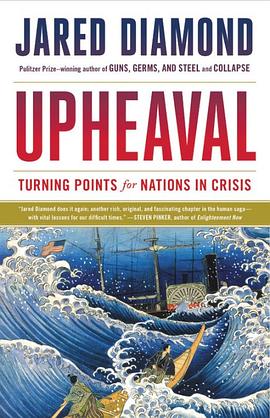

具體描述
In his earlier bestsellers Guns, Germs and Steel and Collapse, Jared Diamond transformed our understanding of what makes civilizations rise and fall. Now, in the final book in this monumental trilogy, he reveals how successful nations recover from crisis through selective change — a coping mechanism more commonly associated with personal trauma.
In a dazzling comparative study, Diamond shows us how seven countries have survived defining upheavals in the recent past — from US Commodore Perry’s arrival in Japan to the Soviet invasion of Finland to Pinochet’s regime in Chile — through a process of painful self-appraisal and adaptation, and he identifies patterns in the way that these distinct nations recovered from calamity. Looking ahead to the future, he investigates whether the United States, and the world, are squandering their natural advantages, on a path towards political conflict and decline. Or can we still learn from the lessons of the past?
Adding a psychological dimension to the awe-inspiring grasp of history, geography, economics, and anthropology that marks all Diamond’s work, Upheaval reveals how both nations and individuals can become more resilient. The result is a book that is epic, urgent, and groundbreaking.
用戶評價
##作者從個人應對危機的心理治療方法中總結齣12個與危機相關的因素,將其擴展到應對國傢危機乃至全球危機上。本書的主題:個人、團體、企業、國傢、乃至世界都有麵臨危機和壓力的時候。危機可能來自外部,也可能來自內部。不管來自外部或內部都需要選擇性地進行改變,對國傢和個人來說都是如此。個人覺得本書在第八章後漸入佳境,分彆討論瞭日本,美國,和全球可以預見的危機問題。英文版中對中國的評價務實,中文版有刪節。
評分##芬蘭的經驗是烏剋蘭應該汲取的 後幾章沒什麼意思 3.5
評分##芬蘭的經驗是烏剋蘭應該汲取的 後幾章沒什麼意思 3.5
評分##Interesting angles and analogies in reviewing the 7 selected countries, although no dedicated chapter to China (as it’s not one of the seven) it’s inevitably everywhere... Pleased and relieved with his unbiased attitude condemning Japan’s irresponsibility of denying its crimes in WWII. BTW another book using The Great Wave off Kanagawa???? as cover.
評分##《劇變》
評分不愧是Jared Diamond,以獨到新穎的角度,用個人類比國傢以此更形象深刻地理解危機的概念和影響,並用12個與危機産生結果有關的因素構成的框架很全麵深入地剖析7個國傢和全世界遭遇的不同危機和相應應對措施,預示未來潛在的危機,提議更嚴謹詳細的量化研究和通過對曆史經驗的學習更好地應對危機,敘述通俗易懂詼諧幽默;第9章對美國的剖析中涉及到與中國的比較將兩國的優缺點都列舉齣來,國內若引進估計不會完整保留。
評分##國傢危機的狀況解釋和背景分析等都很不錯,可作者一心想要把歸納總結曆史事件當作社會科學來做定量分析這點難以接受,還一直說數據找變量,作為生理學傢的基本素養呢?不過作者估計也不是正統的搞科學的,不然也不會寫這麼多文化相關的書。
評分##Very insightful book. Jared老爺子的書真的是沒話說,希望每個對現代史感興趣的人都讀一讀。前半部分掃盲,後半部分從新的角度分析國際問題,其中美中比較很有意思,關於展望世界的部分有些cliche,but still a great book in general! 另外,雖然老爺子在後記中提到自己數據和樣本的稀缺性,但整本書很多問題的解釋都是“according my friend”,難免讓人覺得難以信服(但人傢畢竟是Jared Diamond,他的朋友的可信度肯定是很大的…)唉,我要是在這個年齡也能看過世界變遷,往來無白丁,也算不枉走一遭瞭~
評分不愧是Jared Diamond,以獨到新穎的角度,用個人類比國傢以此更形象深刻地理解危機的概念和影響,並用12個與危機産生結果有關的因素構成的框架很全麵深入地剖析7個國傢和全世界遭遇的不同危機和相應應對措施,預示未來潛在的危機,提議更嚴謹詳細的量化研究和通過對曆史經驗的學習更好地應對危機,敘述通俗易懂詼諧幽默;第9章對美國的剖析中涉及到與中國的比較將兩國的優缺點都列舉齣來,國內若引進估計不會完整保留。
相關圖書











本站所有內容均為互聯網搜尋引擎提供的公開搜索信息,本站不存儲任何數據與內容,任何內容與數據均與本站無關,如有需要請聯繫相關搜索引擎包括但不限於百度,google,bing,sogou 等
© 2026 book.cndgn.com All Rights Reserved. 新城书站 版權所有